
How to Increase Med Spa Revenue Per Patient: The 2026 Growth Blueprint

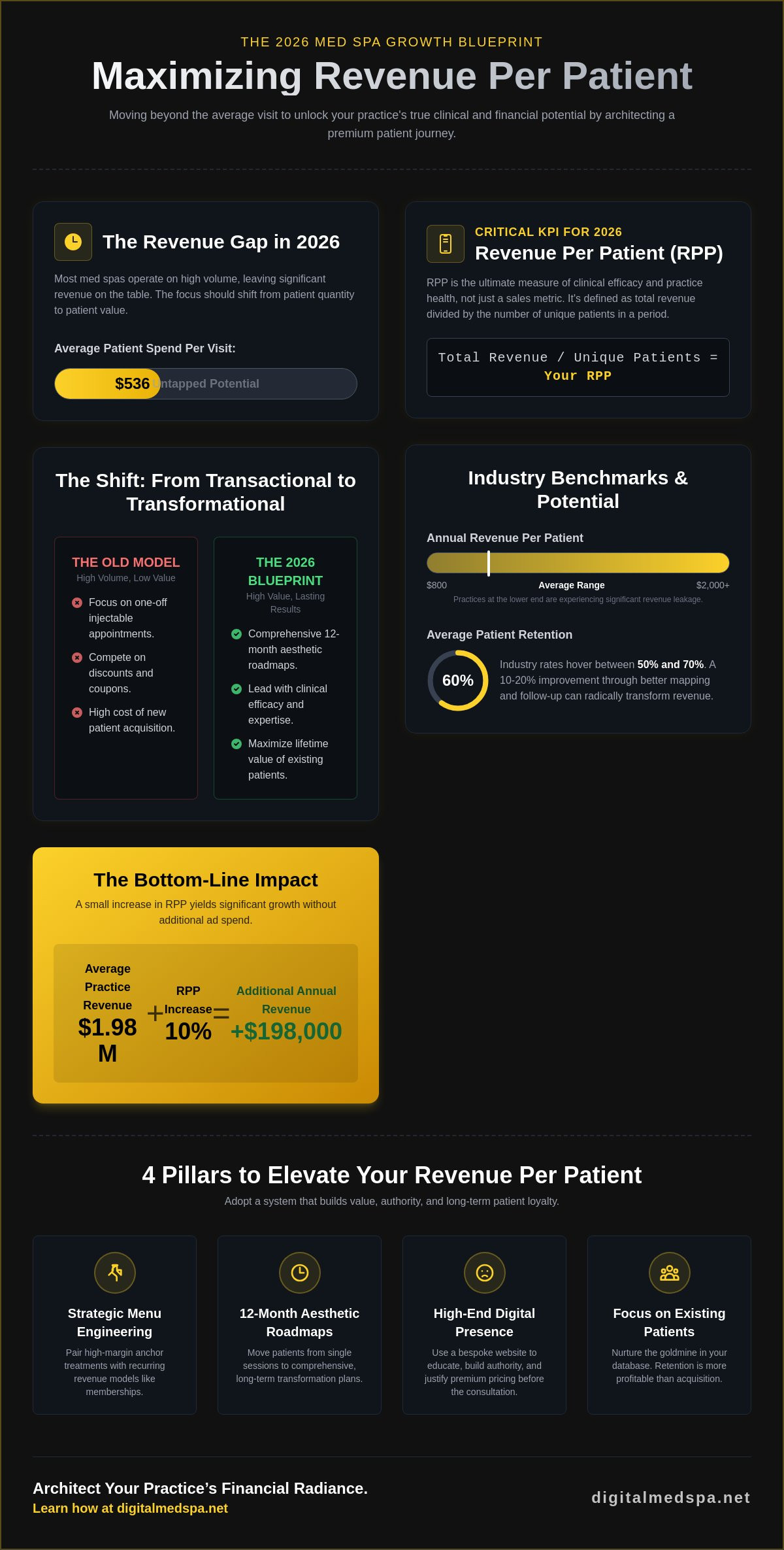
While the average patient spends $536 per visit in 2026, most practitioners are leaving significant clinical and financial potential on the table. You've likely felt the frustration of plateauing revenue despite a busy schedule, or perhaps you're navigating the complexities of the new MoCRA registration renewals and Florida’s HB 1175 safety standards. If you're wondering how to increase med spa revenue per patient without appearing transactional, the answer lies in balancing the precision of medical science with a more sophisticated, bespoke patient journey.
We believe that elevating your practice's value is the natural clinical outcome of a perfectly architected digital and physical experience. This article provides the 2026 growth blueprint to elevate your average ticket price through advanced treatment stacking and AI-enhanced personalization. You'll discover how to leverage regenerative aesthetics and refined digital frameworks to move beyond the $800 annual revenue per patient benchmark. The result is a practice that feels deeply personal, impeccably clinical, and consistently premium for every individual who walks through your doors.
Key Takeaways
Redefine your growth strategy by prioritizing Revenue Per Patient as a vital measure of clinical efficacy rather than a simple sales metric.
Leverage high-end digital touchpoints and bespoke website design to educate patients on advanced procedures, justifying premium pricing through perceived authority.
Master how to increase med spa revenue per patient by architecting a menu that pairs high-margin anchor treatments with tiered, recurring memberships.
Adopt a 12-month aesthetic roadmap protocol that moves patients away from transactional sessions toward comprehensive, natural-looking transformations.
Understand why a sophisticated digital presence is the essential prerequisite for attracting high-value patients and sustaining a premium clinical brand.
Table of Contents
Understanding Revenue Per Patient (RPP) in the Modern Aesthetic Landscape
Practitioners often mistake high patient volume for high practice health. While a crowded waiting room feels successful, the true vitality of a modern aesthetic business is found in its efficiency. Revenue per patient is defined as the total revenue generated divided by the number of unique patients seen in a specific period. In the current State of the Med Spa Industry, where the U.S. market has surpassed a $19 billion valuation, RPP has emerged as the most critical KPI for 2026. It reveals whether you're building a sustainable clinical legacy or simply running a high-speed treadmill of patient acquisition.
Chasing new leads is frequently a distraction from the goldmine already sitting in your database. The cost of acquiring a new patient is significantly higher than nurturing an existing one, yet many owners focus 90% of their energy on top-of-funnel marketing. High-value aesthetic patients aren't looking for the lowest price; they're seeking luminous, natural-looking results and a practitioner who acts as a trusted guide. When you shift your focus to how to increase med spa revenue per patient, you stop competing on discounts and start leading with clinical efficacy and bespoke care.
The Shift from Transactional to Transformational Care
Modern aesthetics has moved beyond the "one-off" injectable appointment. Patients in 2026 are increasingly interested in "treatment stacking," where multiple modalities like biostimulators, radiofrequency, and medical-grade skincare are layered for superior outcomes. This transformational approach naturally elevates the patient lifetime value. By positioning yourself as a clinical authority rather than a service provider, you justify premium treatment plans that address the root causes of aging. This transition from a single $536 visit to a comprehensive, multi-modality journey is the most elegant way to ensure practice growth while delivering the radiance your clients desire.
Calculating Your Current Baseline and Growth Potential
Understanding your starting point is essential for meaningful progress. Industry data shows that while a single visit averages between $500 and $700, the annual revenue per patient typically ranges from $800 to $2,000. If your numbers sit at the lower end, you're likely experiencing "revenue leakage" through poor follow-up protocols or a lack of long-term treatment mapping. With average patient retention rates hovering between 50% and 70%, there's immense opportunity to recapture lost potential. Consider the impact on a practice generating the 2022 average of $1.98 million; a simple 10% increase in RPP adds nearly $200,000 to the bottom line. This growth requires no additional ad spend, relying instead on the precision of your internal systems and the sophistication of your patient experience.
The Digital Infrastructure of High-Value Patient Retention
Your digital presence is the virtual lobby that determines whether a patient views your practice as a premium clinic or a generic discount center. High-value patients don't just "book an appointment"; they invest in an expert. While many practitioners view their website as a simple booking portal, high-performing clinics treat it as an engine for perceived value. If your site looks like a template, your services will be priced like a commodity. Investing in sophisticated med spa website design allows you to command premium rates by showcasing clinical precision and luxury before the first consultation even occurs.
The strategy of how to increase med spa revenue per patient starts with the initial search query. Patients looking for "Botox coupons" are transactional and likely to churn. Patients searching for "comprehensive facial rejuvenation" or "biostimulator treatment plans" are looking for expertise. By refining your med spa seo to target these high-intent, solution-oriented keywords, you attract a demographic that prioritizes efficacy over cost. This shift is vital as the U.S. market is projected to reach an estimated $17.6 billion by 2030, with a 13.9% compound annual growth rate driving competition for high-value clients.
Priming the Patient: The Pre-Consultation Digital Experience
True patient retention strategies in 2026 rely on digital education that builds trust before the patient enters the exam room. High-performance landing pages should focus on "The Result," using high-resolution "Before and After" galleries that highlight subtle, natural-looking transformations. Automated email sequences can then nurture this interest by explaining the science behind treatment stacking. When a patient understands that combining radiofrequency with injectables leads to a more luminous outcome, they're more likely to accept a bundled plan that exceeds the $536 average visit spend. If you're ready to align your digital presence with your clinical standards, our team can help you architect a practice that radiates authority.
SEO Strategies for High-Value Service Acquisition
Building authority through content is the most effective way to reduce price resistance. When your website provides detailed explanations of advanced procedures like exosome therapy or the expected 2026 arrival of Evolysse Sculpt, you position your practice as a leader in modern aesthetics. This content-led approach ensures that when patients find you, they aren't asking about price; they're asking about your bespoke treatment process. Using long-tail keywords helps you capture patients at the peak of their decision-making journey, ensuring your marketing dollars attract individuals who value the safety and sophistication of your brand over a low-cost transaction.
Strategic Menu Engineering: Balancing High-Margin Procedures with Recurring Revenue
A menu is more than a list of clinical offerings; it's the financial blueprint of your practice. To understand how to increase med spa revenue per patient, you must distinguish between "Anchor Treatments" and "Add-on Enhancements." Anchor treatments are high-impact, energy-based or regenerative procedures that command premium pricing, often ranging from $400 to over $800 per visit. Add-ons, while lower in price, serve to refine the outcome and increase the average transaction value. By architecting your menu to lead with results rather than modalities, you guide the patient toward a comprehensive plan that prioritizes their aesthetic journey over a single transaction.
The current state of the med spa industry reflects a significant shift toward high-margin, minimally invasive procedures. With the global market projected to reach $49 billion by 2030, the competition for discerning patients is intensifying. Success in 2026 requires a menu that emphasizes clinical luxury and efficacy. Rather than offering a fragmented list of services, your menu should present solutions that stack various technologies to achieve a luminous, natural appearance. This approach doesn't just enhance the patient experience; it ensures your practice remains at the forefront of modern aesthetics.
The High-Margin Powerhouse: Regenerative and Energy-Based Devices
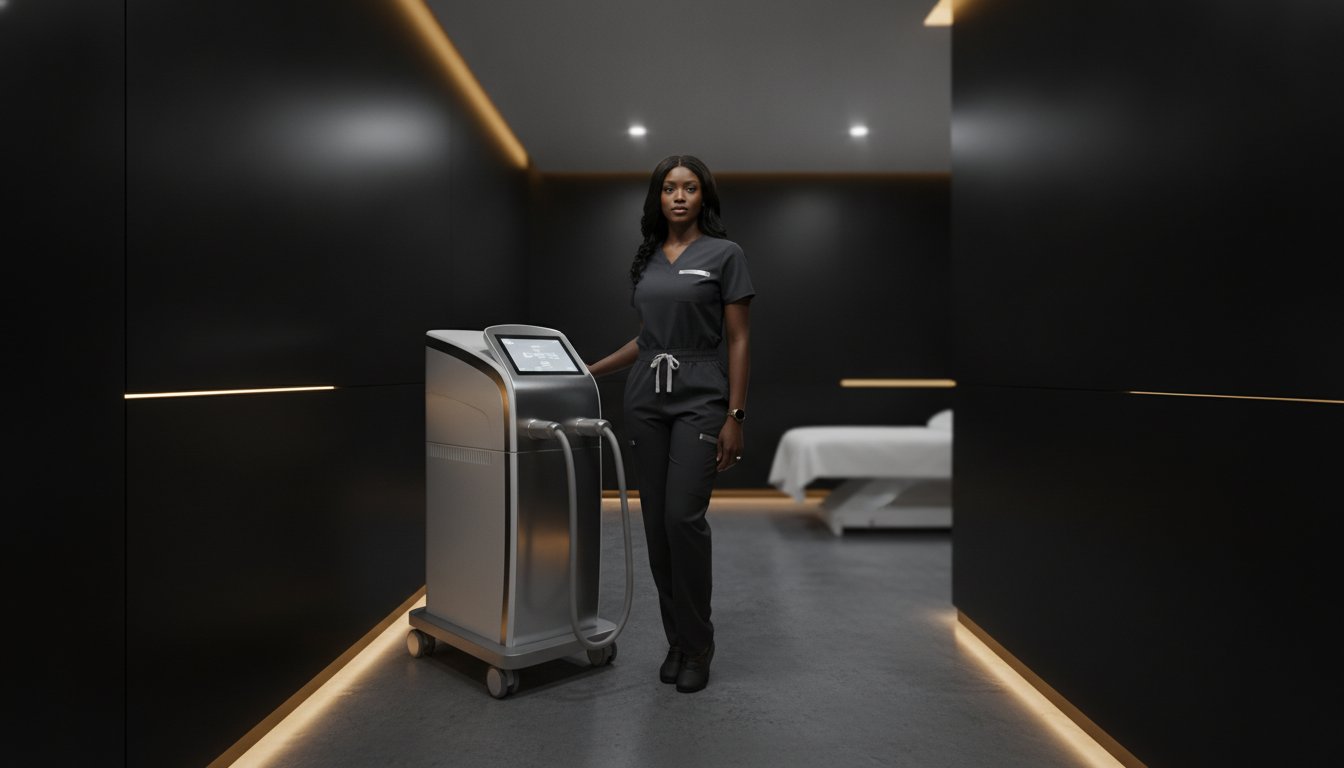
Regenerative medicine is the cornerstone of RPP growth in 2026. Technologies such as RF microneedling, laser resurfacing, and biostimulators like the newly approved Evolysse Sculpt offer superior ROI because they address structural skin quality. These are the gold standards of a modern practice. When your staff is trained to discuss the physiological benefits of collagen induction rather than the technical specs of a machine, the conversation shifts from cost to value. Patients are willing to invest more in a treatment that promises long-term rejuvenation and radiance, moving your average spend well beyond the industry baseline.
Architecting a Recurring Revenue Model That Actually Works
The "Bank-Your-Botox" membership model is becoming a relic of the past. Modern memberships focus on tiered access to clinical luxury and holistic wellness. A successful 2026 membership program might include monthly medical-grade facials paired with exclusive access to new technologies or priority scheduling. This creates a steady stream of recurring revenue while keeping the patient engaged with your brand. By using digital member portals to offer personalized education, you can encourage the uptake of high-margin services, ensuring that your membership drives both loyalty and financial health.
Implementing Bespoke Treatment Mapping: A 5-Step Protocol
Transitioning from transactional sales to clinical treatment mapping is the most significant pivot a practice can make to ensure long-term viability. While many competitors rely on generic bundling, a bespoke protocol ensures your patients feel seen, heard, and expertly guided. This methodology moves the conversation away from the price of a single syringe and toward the value of a comprehensive clinical outcome. Mastering the art of how to increase med spa revenue per patient requires a shift in perspective, where every consultation is viewed as the beginning of a multi-year aesthetic partnership.
Step 1: The Comprehensive Aesthetic Assessment. Begin by setting a clinical baseline, evaluating skin quality, structural volume, and patient goals through a lens of natural-looking refinement.
Step 2: Designing the 12-Month Aesthetic Roadmap. Outline a phased approach that accounts for downtime, budget, and the biological timeline of results, such as the collagen induction period required for biostimulators.
Step 3: Visualizing Results with Advanced Imaging. Utilize high-resolution digital tools to bridge the gap between current concerns and future radiance, making the invisible benefits of preventative care visible.
Step 4: The Art of the Ethical Upsell. Position additional services as necessary components of a successful outcome, using education to justify the integration of new technologies like the 2026 FDA-approved Evolysse Sculpt.
Step 5: Post-Treatment Follow-up and Next Phase Introduction. Every recovery check-in is an opportunity to review the roadmap and prepare the patient for their next scheduled milestone.
The Consultation as a Revenue Engine
Standardizing the consultation process ensures that every patient understands their full aesthetic potential. By using a "Gap Analysis," providers can clearly demonstrate the distance between a patient's current state and their desired luminosity. This process isn't about persuasion; it's about clinical honesty. Instead of discussing costs, the conversation should focus on the investment required for a curated plan that delivers lasting, natural results. If you're ready to implement these high-performance systems, explore our business coaching and consulting services to refine your clinical operations.
The Ethical Upsell: Education as the Primary Tool
In a premium environment, medical-grade skincare is a non-negotiable prerequisite for procedure efficacy. Providers must use "Prescriptive Language" rather than "Suggestive Language," treating skincare and cross-department referrals as medical necessities. When an injector refers a patient to an aesthetician for skin health, it reinforces the practice’s commitment to holistic rejuvenation. This seamless integration of services ensures that the patient receives the highest level of care while naturally elevating the practice's revenue per visit beyond the $536 industry average.
Digital Med Spa: Architecting Your Practice’s Financial Radiance
A premium clinical brand requires a digital infrastructure that mirrors the sophistication of its medical protocols. If your online presence lacks the precision of your aesthetic results, you'll struggle to attract the high-value patient who prioritizes safety and efficacy over a discount. Choosing the right med spa marketing agency is about more than just visibility; it’s about architecting a journey that validates your expertise before the first phone call. When your digital touchpoints radiate authority, the question of how to increase med spa revenue per patient becomes a matter of strategic positioning rather than aggressive sales tactics.
Our approach at Digital Med Spa integrates technical marketing precision with high-level business consulting. We've helped practices move their average annual revenue per patient from the $800 baseline toward the $2,000 industry ceiling by refining their brand narrative and SEO strategy. By targeting the 85.3% of the market that values bespoke care, we help you transition from high-volume churn to high-value clinical relationships. This synergy ensures your practice isn't just getting more clicks, but more revenue per chair through patients who are pre-educated on the efficacy of your most advanced procedures.
The Synergy of Custom Design and Business Coaching
Your website should function as a 24/7 high-value patient consultant, answering technical questions and setting expectations for clinical luxury. We bridge the gap between "more traffic" and "more revenue per chair" by ensuring every digital interaction reinforces your practice’s unique value proposition. Our philosophy centers on sophistication, safety, and scale. We don't just optimize for search engines; we optimize for the human experience, guiding patients from their initial skin concern to a science-backed solution that empowers their natural beauty. This meticulous attention to detail is what separates a transactional business from a premium clinical legacy.
Next Steps: Evaluating Your Current Growth Map
Scaling a practice in 2026 requires meticulous attention to both digital performance and clinical operations. Auditing your current patient journey for revenue leaks often reveals that the 50% to 70% average retention rate can be significantly improved with the right digital nurture sequences and reputation management. Partnering with an agency that understands the "Clinical Luxury" niche is essential for maintaining your brand’s integrity while driving financial growth. If you’re ready to move beyond transactional marketing and build a practice that reflects your clinical excellence, schedule your 2026 Growth Strategy Consultation with Digital Med Spa today.
Cultivating Your Practice’s Future Radiance
The transition from transactional services to a sophisticated, 12-month treatment mapping protocol aligns your practice with the projected $49 billion global market growth expected by 2030. This strategic shift ensures that the $536 average visit spend is merely the beginning of a deeper clinical journey. By engineering a menu that balances high-margin regenerative procedures with tiered memberships, you create a sustainable model where financial health and patient results coexist beautifully. Learning how to increase med spa revenue per patient is ultimately about perfecting the synergy between medical precision and high-end hospitality.
At Digital MedSpa, we offer over 8 years of specialized aesthetic marketing experience to help you navigate this evolution. Our proprietary Patient Acquisition Engine is designed to deliver national reach with the intimacy of bespoke, boutique-level service. It's time to move beyond the plateau of high-volume churn and embrace a future defined by clinical excellence and financial scale. Architect Your Med Spa’s Future with Digital MedSpa. Your commitment to enhancing natural beauty deserves a digital presence that is equally luminous and authoritative.
Frequently Asked Questions
What is the average revenue per patient for a successful med spa?
A successful med spa typically generates between $800 and $2,000 annually per patient. While the average spend per visit in 2026 ranges from $500 to $700, top-tier practices achieve the higher end of this spectrum by focusing on long-term treatment mapping. Tracking this metric allows you to move beyond the industry average retention rate of 50% to 70%, ensuring your practice remains financially healthy as the U.S. market grows toward its 2030 projections.
How do I increase my med spa revenue without raising prices?
You can understand how to increase med spa revenue per patient without raising prices by implementing "treatment stacking" and prescriptive retail recommendations. Layering complementary modalities, such as pairing radiofrequency with biostimulators, enhances clinical outcomes and increases the average ticket price simultaneously. This approach focuses on maximizing the clinical efficacy of each visit rather than just the cost of a single service.
Is a membership program better than service bundling for RPP?
Membership programs are generally superior to service bundling because they foster consistent, recurring revenue and long-term patient loyalty. While bundling provides a one-time boost to transaction value, tiered memberships provide ongoing access to clinical luxury and wellness. This model encourages patients to return more frequently, which is essential for practices aiming to exceed the $536 average spend per visit recorded in early 2026.
How can my front desk staff help increase revenue per patient?
Your front desk team increases revenue by mastering the art of the "next-phase" appointment and using prescriptive language during check-out. Instead of asking if a patient wants to book again, the staff should reference the patient's 12-month aesthetic roadmap to schedule the next necessary milestone. This ensures the patient journey remains continuous and professional, preventing revenue leakage between treatments.
What are the highest margin treatments in a medical spa?
Injectables like Botox and dermal fillers, alongside energy-based procedures such as RF microneedling, remain the highest margin treatments in 2026. Regenerative aesthetics, including biostimulators and the newly approved Evolysse Sculpt, also offer exceptional ROI due to their ability to provide natural-looking, long-lasting results. These services require precision and expertise, allowing you to command premium pricing that reflects your clinical authority.
How does SEO impact the quality and spending power of my patients?
SEO impacts spending power by attracting patients who search for specific clinical solutions rather than the lowest available price. By optimizing for high-intent keywords like "comprehensive facial rejuvenation," you capture a demographic that values expertise and safety protocols. This strategy is a fundamental part of how to increase med spa revenue per patient as it filters for individuals looking for bespoke transformations rather than transactional discounts.
Can a new website design actually increase my average transaction value?
A custom website design increases transaction value by establishing a high perceived value before the patient even enters your clinic. If your digital presence reflects a wellness retreat's luxury and a medical center's precision, patients are more likely to accept premium treatment plans. A sophisticated site functions as a silent consultant, educating visitors on advanced procedures and justifying your clinical rates through authoritative content and visual proof.
What is the best way to introduce high-cost treatment plans to existing patients?
The best way to introduce high-cost plans is through a clinical "Gap Analysis" during a dedicated consultation. By showing patients the difference between their current skin health and their desired radiance, you frame the treatment plan as a necessary investment in their results. This move from suggestive to prescriptive language ensures the patient feels cared for rather than sold to, fostering deep trust and long-term loyalty.


Comments