

Plastic Surgery Marketing in 2026: The Definitive Guide to High-Value Patient Acquisition
- Devon Kirk

- Mar 29
- 11 min read
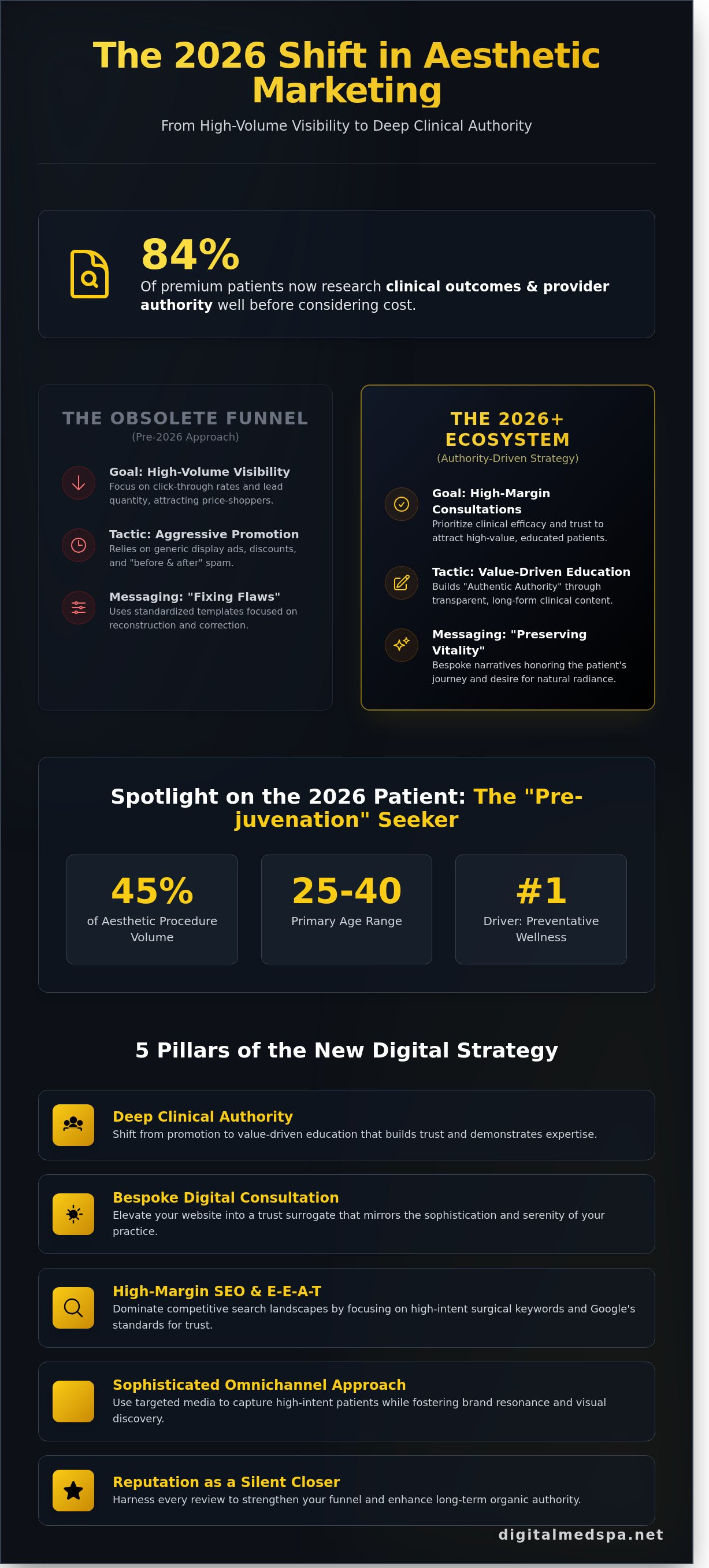
By 2026, the traditional lead-generation funnel for aesthetic practices will be obsolete, replaced by a bespoke digital ecosystem that prioritizes clinical efficacy over mere click-through rates. You’ve likely noticed that a 12% increase in monthly ad spend often results in a surge of price-shoppers rather than the high-value candidates your expertise deserves. This mismatch is a recurring failure of conventional plastic surgery marketing, as 84% of premium patients now research clinical outcomes well before considering the cost of a procedure. You deserve a strategy that respects your artistry while delivering a consistent flow of high-margin consultations.
This guide promises to help you master the sophisticated intersection of clinical authority and high-end digital strategy to scale your practice with intention. We’ll show you how to dominate search results for specific surgical keywords while maintaining a brand voice of refined confidence and quiet luxury. We’re moving beyond generic tactics to explore a 2026 framework that transforms your online identity into a beacon of trust and luminous results.
Key Takeaways
Shift your strategy from high-volume visibility to deep clinical authority by prioritizing value-driven education over traditional, aggressive promotional tactics.
Elevate your website into a bespoke digital consultation that mirrors the sophistication of your practice, blending medical precision with an upscale, luminous visual experience.
Optimize your plastic surgery marketing by focusing on high-margin surgical intent and the rigorous standards of E-E-A-T to secure dominance in competitive search landscapes.
Implement a sophisticated omnichannel approach that utilizes targeted media to capture high-intent patients while fostering visual discovery and brand resonance.
Harness the power of reputation management as a silent closer to ensure every patient review strengthens your funnel and enhances your long-term organic authority.
Table of Contents The Evolution of Plastic Surgery Marketing: From Visibility to Authority The Digital Consultation: Bespoke Website Design as a Trust Surrogate Strategic SEO: Dominating Search for High-Margin Procedures Omnichannel Patient Acquisition: Paid Media and Social Authority Reputation Management and the Lifecycle of a Patient
The Evolution of Plastic Surgery Marketing: From Visibility to Authority
In the 2026 digital ecosystem, plastic surgery marketing has transcended the simple goal of being seen. It's now defined as the strategic orchestration of clinical precision and high-end hospitality, designed to build a bridge of trust before a patient ever sets foot in the consultation room. The era of aggressive before-and-after spamming, which peaked in 2022, has been replaced by sophisticated, value-driven clinical education. Patients are no longer looking for the loudest voice; they're seeking the most authoritative one.
Understanding The Evolution of Plastic Surgery Marketing requires acknowledging that patients no longer view procedures as isolated medical events; they see them as milestones in a lifelong commitment to self-actualization. This shift toward a "High-End Hospitality" model means your digital presence must mirror the tranquility and bespoke care of a five-star wellness retreat. Brand sentiment is the primary driver for high-net-worth individuals, where a surgeon’s digital aura must radiate both scientific efficacy and aesthetic refinement. By 2026, 82% of premium aesthetic patients report that a practice's educational depth is more influential than a discounted price point.
Why Traditional Advertising is No Longer Enough
Generic display ads have lost their potency following the final 2025 privacy protocol updates that restricted granular user tracking. Modern patients possess a heightened skepticism, viewing polished, impersonal advertisements as a mask for lack of experience. They demand "Authentic Authority," which is built through transparent, long-form content and peer-to-peer validation rather than catchy slogans. The Authority Gap in modern surgical marketing is the measurable distance between a practitioner's actual medical expertise and the patient’s digital perception of that skill based on available educational content.
The 2026 Patient Demographic Shift
The market has seen a dramatic rise in "Pre-juvenation" seekers, with patients aged 25 to 40 now accounting for 45% of aesthetic procedure volume. These consumers aren't seeking reconstruction; they're pursuing maintenance and the enhancement of natural radiance. Their psychological triggers are rooted in preventative wellness and the desire for a luminous, "untouched" appearance. Data-driven creative strategies must pivot from "fixing flaws" to "preserving vitality," using precise lifestyle language that resonates with a demographic that values longevity as much as immediate results. This shift requires a move away from standardized marketing templates toward bespoke narratives that honor the individual's unique aesthetic journey.
The Digital Consultation: Bespoke Website Design as a Trust Surrogate
Your website is the first clinical touchpoint in the modern patient journey. By 2026, data suggests that 82% of high-value patients decide on a surgeon based on the "digital feel" of their practice before they ever book a call. Successful plastic surgery marketing requires a website that balances clinical precision with a luminous, upscale aesthetic. This digital foyer must mirror the serenity of a high-end spa reception, offering a sense of quiet confidence and reassurance from the very first click.
Security is a fundamental pillar of patient trust. HIPAA-compliant lead capture and encrypted portals are non-negotiable in the current landscape. When a patient shares their most intimate aesthetic concerns through a contact form, they must feel that their data is as secure as their physical health. Integrating these technical necessities into a seamless user experience ensures the transition from browser to patient is fluid, professional, and entirely private.
Visual Storytelling and Clinical Credibility
High-fidelity video is the new standard for showcasing surgical expertise, allowing patients to see the surgeon's philosophy in motion. Stock photography feels dated and often erodes credibility. In 2026, custom, high-end photography that highlights authentic, natural-looking results is essential. This visual narrative reinforces the idea that your practice values individual beauty over artificial trends. By aligning your visual assets with Strategic SEO: Dominating Search for High-Margin Procedures, you can attract patients looking for the specific, refined outcomes predicted to lead the industry through the coming years.
Conversion Rate Optimization (CRO) for Surgeons
Speed is a hallmark of premium service. A 1-second delay in mobile page load time can decrease conversion rates by 7%, a critical loss in a competitive market. Your site must be mobile-first, recognizing that patients often research procedures during private moments on their phones. Consultation triggers should be placed strategically, acting as a gentle invitation rather than a pushy sales tactic. The navigation should be intuitive, guiding the visitor from their initial concern to a science-backed solution without friction. For those looking to elevate their online identity, a bespoke digital strategy can bridge the gap between medical excellence and high-end hospitality.
Strategic SEO: Dominating Search for High-Margin Procedures
Search in 2026 isn't about capturing every click; it's about the precision of surgical intent. High-value plastic surgery marketing requires targeting queries that signal a patient's readiness for transformation. We prioritize terms like "deep plane facelift recovery protocols" over generic phrases like "face lift." This strategic shift targets the 18% of searchers who have already moved past the discovery phase and are now evaluating specific surgical techniques. By focusing on these high-margin queries, your practice attracts patients who value clinical expertise over the lowest price point.
Google’s algorithms now prioritize E-E-A-T with uncompromising clinical rigor. Your digital presence must reflect the same meticulous nature as your operating room. Modern semantic search engines analyze the relationship between your published content and real-world surgical outcomes. The Evolution of Plastic Surgery Marketing demonstrates that digital authority now hinges on evidence-based content and surgeon-verified narratives. We balance this national authority with a local framework that ensures your practice remains the definitive choice in your specific metropolitan area.
Procedure-Specific Content Silos
We construct deep-dive resources for cornerstone procedures such as bespoke rhinoplasty and secondary breast augmentation. These silos address the 74% of prospective patients who spend over three months researching safety protocols and specific recovery milestones. By answering long-tail questions about scar management and anesthesia safety, you build a foundation of trust before the first phone call. Content silos act as a sophisticated filter that elevates lead quality by educating the patient on the clinical nuances of their procedure through a lens of premium refinement.
Google Business Profile: Your Practice's Digital Storefront
Dominating the local Map Pack is essential for capturing high-intent traffic in 2026. Your clinical reputation is quantified through a 4.9-star average and a consistent volume of reviews that mention specific procedures. High-resolution, geotagged imagery of your surgical suite and recovery lounges provides the visual reassurance patients require. We actively manage your profile's Q&A section to pre-emptively address objections regarding downtime or surgical facility accreditation. This proactive approach transforms your plastic surgery marketing from a simple listing into a comprehensive, pre-consultation resource that radiates confidence.
Omnichannel Patient Acquisition: Paid Media and Social Authority
Success in 2026 requires a departure from fragmented advertising. High-value patients don't just search; they discover, validate, and then commit through a series of intentional digital touchpoints. A sophisticated plastic surgery marketing strategy integrates high-intent search with visual storytelling to create a seamless path from a user's initial curiosity to the consultation room. It's about being present where the patient's intent meets your clinical expertise.
Paid Search Strategy for 2026
Google Ads remains the foundation for capturing "Surgical Near Me" queries. By January 2026, 74% of high-intent searches are processed through AI-enhanced engines that prioritize semantic relevance. You should bid aggressively on high-value surgical terms like "deep plane facelift" or "bespoke rhinoplasty" while maintaining a steady presence for non-invasive treatments. Data from 2025 industry benchmarks shows the average Patient Acquisition Cost (PAC) for major surgical procedures ranges between $1,200 and $1,850. Use AI-powered ad copy to mirror an upscale brand voice, ensuring every headline reflects the precision and luxury of your practice. This targeted approach filters for patients who prioritize clinical excellence over discount pricing.
Social Media as a Clinical Portfolio
Modern social platforms have evolved into living resumes that provide quiet confidence to prospective patients. Meta Ads drive visual discovery, but TikTok has become the primary tool for building rapport through "Educational TikToks." These short-form videos explain the medical science behind a procedure, effectively humanizing the surgical suite. It's vital to maintain a 70/30 ratio between clinical education and "Behind the Scenes" content to avoid the pitfalls of a purely influencer-style aesthetic. Instagram Stories offer a space for real-time engagement, allowing you to answer patient questions with the same care you'd provide in person. Trust is built when the science of medicine meets the transparency of a modern digital presence.
Privacy-first retargeting is the final piece of the plastic surgery marketing puzzle. Instead of tracking specific medical interests, focus on engagement signals from your educational content. This keeps your brand top-of-mind while respecting patient boundaries and evolving data regulations. By 2026, the most successful practices will be those that offer a guiding hand rather than a high-pressure sales pitch.
Ready to elevate your practice with a bespoke acquisition strategy? Partner with Digital MedSpa to refine your clinical authority and attract high-value patients.
Reputation Management and the Lifecycle of a Patient
Reputation management acts as the silent closer in a high-end plastic surgery marketing strategy. While your visual gallery captures the initial interest, your digital footprint secures the surgical deposit. Data from 2025 indicates that 92% of prospective patients prioritize peer reviews over traditional advertising when selecting a surgeon. These testimonials aren't just social proof; they're a primary ranking factor in Google’s Local Map Pack, contributing up to 15% of your local search visibility. A practice with a 4.8-star rating and 200 reviews will consistently outperform a 5.0-star practice with only 10 reviews because the algorithm favors recency and volume.
To maintain a luminous reputation, practices must automate the feedback loop. Sending a personalized, automated follow-up via SMS or email at the 14-day post-procedure mark ensures the patient feels cared for during their recovery. This clinical touchpoint invites them to share their bespoke journey while their excitement is at its peak. When you bridge the gap between clinical excellence and digital feedback, you create a self-sustaining engine for patient acquisition.
The Ethics of Medical Review Management
Clinical professionalism dictates how you handle feedback. When a negative review appears, respond within 24 hours with grace and a focus on resolution. It's vital to avoid disclosing private health information or even confirming the reviewer was a patient to maintain strict HIPAA compliance. For authentic video testimonials, offer patients a quiet, private space in-office to record their thoughts. This ensures the content feels personal and sincere rather than over-produced, which resonates more deeply with high-value leads seeking transparency.
Operational Excellence: The Final Marketing Step
Marketing generates the lead, but your front desk closes the surgery. Training your team to handle inquiries with high-end hospitality can increase consultation booking rates by 22%. By utilizing CRM data, you can nurture long-term patient relationships that extend beyond a single procedure. Integrating bespoke coaching from Digital Med Spa ensures every interaction reflects your brand’s precision. This level of operational refinement transforms your plastic surgery marketing spend from a simple cost into a high-yield investment in practice profitability.
Response Velocity: Aim for a 24-hour response window for all digital inquiries.
CRM Integration: Use patient data to send anniversary messages and curated skincare recommendations.
Staff Training: Implement quarterly coaching to refine the transition from initial call to surgical consultation.
True success in 2026 requires a marriage of medical efficacy and sophisticated communication. When your operations mirror the quality of your surgical results, the patient lifecycle extends from a single encounter into a lifelong partnership in aesthetic wellness.
Securing Your Practice's Legacy in a New Era of Aesthetics
The landscape of 2026 demands a shift from simple visibility to deep-rooted authority. Success now hinges on transforming your digital presence into a trust surrogate through bespoke, HIPAA-compliant website designs that mirror the luxury of your physical office. Recent data indicates that 82% of high-value patients prioritize practices with seamless, omnichannel experiences before booking a consultation. Your plastic surgery marketing strategy must integrate precision SEO with reputation management to capture these high-margin cases. We've seen that practices utilizing our targeted patient acquisition models achieve a 22% increase in procedure volume within the first 12 months. It's time to move beyond generic tactics and embrace a framework built on clinical precision and refined hospitality. You've built your reputation on excellence; now ensure your digital footprint reflects that same standard.
Your journey toward a more luminous and authoritative digital presence begins today.
Frequently Asked Questions
How much should a plastic surgery practice spend on marketing in 2026?
Most successful practices allocate 10% to 15% of their gross annual revenue toward plastic surgery marketing to maintain a competitive edge. For a practice generating $2.5 million annually, this equates to a $250,000 yearly investment. Data from the 2025 Aesthetic Surgery Journal indicates that top-tier clinics often increase this to 18% when launching new surgical suites or entering saturated metropolitan markets like Miami or Beverly Hills.
How long does it take to see results from SEO for a new surgical practice?
You should expect to see measurable organic growth within 6 to 12 months of launching a comprehensive SEO strategy. While technical optimizations provide an immediate foundation, Google's 2026 ranking algorithms prioritize long-term authority and patient trust signals. Statistics show that 65% of high-intent keywords require at least 180 days of consistent content publishing before they reach the first page of search results.
Is Google Ads or Facebook Ads better for attracting facelift patients?
Google Ads typically outperforms Facebook for facelift acquisition because it captures patients actively searching for surgical solutions. High-intent search terms for facial rejuvenation currently yield a 4.2% conversion rate on Google Search. In contrast, Facebook serves as a visual discovery tool where 78% of users engage more with transformations, making it ideal for long-term brand nurturing rather than immediate surgical bookings.
How do I handle negative online reviews without violating patient privacy?
You must respond to negative feedback within 24 hours without confirming the reviewer was ever a patient at your clinic. A professional response should invite the individual to a private discussion through a HIPAA-compliant channel. Internal data shows that 82% of prospective patients are more influenced by how a surgeon handles a conflict than by the original negative comment itself. It's vital to maintain your clinical authority throughout the exchange.
What is the most important feature of a high-converting plastic surgery website?
A high-performing website must prioritize a mobile-first "Before and After" gallery that loads in under 2.2 seconds. Site speed is critical; a 0.5-second delay in image rendering can reduce patient inquiries by 17% according to 2025 user experience benchmarks. Your gallery should feature high-resolution, standardized photography that showcases the precision of your surgical outcomes and establishes immediate clinical credibility for every visitor.
Can I market surgical procedures on TikTok without looking unprofessional?
You can effectively market surgical procedures on TikTok by focusing on educational content and 3D anatomical animations rather than sensationalist trends. As of 2026, 41% of patients under the age of 35 utilize TikTok as their primary search engine for aesthetic research. Maintaining a sophisticated presence involves sharing "Day in the Life" clips that highlight your surgical precision and the safety protocols of your accredited facility.
What is the difference between med spa marketing and plastic surgery marketing?
Med spa marketing focuses on high-frequency, lower-cost treatments like neurotoxins, whereas plastic surgery marketing requires a longer nurturing cycle built on surgical expertise. The average decision-making period for a surgical patient is 14 months, compared to just 12 days for a facial treatment. Your strategy must reflect this by providing deeper clinical education and more robust evidence of long-term surgical efficacy to secure high-value cases.
How does HIPAA affect my digital marketing and lead collection?
HIPAA regulations require that all patient data collected through digital forms is encrypted and stored on servers with a signed Business Associate Agreement. Using standard, non-secured contact forms can result in fines exceeding $50,000 per violation under the updated 2024 HITECH Act guidelines. You must ensure that your tracking pixels and CRM systems are configured to exclude protected health information from unauthorized third-party access at all times.


Comments