
How to Sell Retail Products in a Med Spa: The Definitive Guide to Prescriptive Growth

What if your retail shelves weren't merely a display of luxury bottles, but a vital, clinical extension of the treatments performed in your chairs? It's a common frustration for practitioners when medical staff resist the idea of selling, or when patients walk out of a high-end procedure only to purchase their post-care regimen from a massive online retailer. You've likely felt the sting of capital tied up in dead inventory that sits idle rather than driving growth. We understand that your priority is the precision of medical science and the safety of your patients, not high-pressure sales tactics.
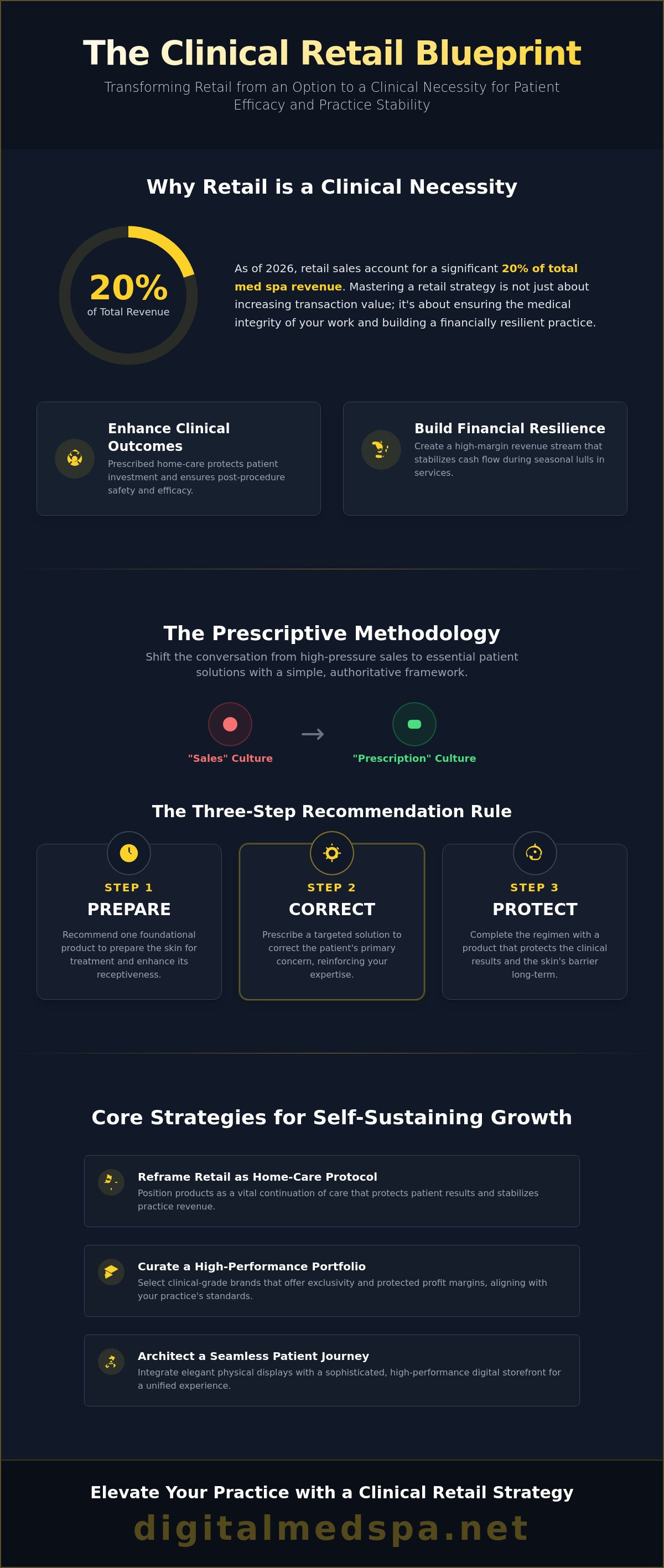
This guide will show you how to sell retail products in a med spa by reframing the conversation into a prescriptive necessity that ensures treatment efficacy. With retail accounting for 20% of industry revenue as of 2026, capturing this margin is essential for a thriving practice. You'll learn how to transform your retail program into a self-sustaining clinical continuation of the patient's aesthetic journey. We'll explore strategies to increase your average transaction value and improve patient results through home-care compliance, ensuring your expertise follows every client out the door.
Key Takeaways
Reframe retail as a vital home-care protocol that protects patient results and stabilizes practice revenue during seasonal shifts.
Master how to sell retail products in a med spa by using a three-step prescriptive methodology that prioritizes patient solutions over sales tactics.
Build a high-performance portfolio by selecting clinical-grade brands that offer both exclusivity and protected profit margins.
Create a seamless patient journey by integrating elegant physical displays with a sophisticated, high-performance digital storefront.
Leverage educational marketing and ingredient science to foster long-term compliance and drive self-sustaining retail growth.
Table of Contents
Why Retail is Essential for Clinical Outcomes and Practice Stability
Med Spa Retail is a clinical necessity that bridges the gap between professional intervention and daily skin health. To understand the operational complexity of what is a medical spa, one must look beyond the treatment menu and into the patient's bathroom cabinet. When you master how to sell retail products in a med spa, you aren't just increasing a transaction value; you're ensuring the medical integrity of your work. Retail functions as the "home-care protocol" required for post-procedure safety, acting as a vital extension of the provider's medical expertise. Without this continuation of care, the clinical results achieved in the treatment room are left to chance.
Beyond clinical efficacy, a robust retail program provides a steady heartbeat for your business. Statistics from 2026 indicate that retail sales account for approximately 20% of total med spa revenue. This income is essential for stabilizing your cash flow during seasonal lulls when appointment books for injectables or laser resurfacing might soften. By fostering a culture of product compliance, you increase the lifetime value of every patient. They stop viewing your practice as a place for an occasional "fix" and start seeing you as a long-term partner in their aesthetic journey. This shift in perception is what builds a resilient, self-sustaining practice.
The Role of Retail in Post-Procedure Efficacy
Medical-grade skincare is a technical requirement for maintaining the results of sophisticated treatments like Botox, fillers, or chemical peels. The skin's barrier and cellular health dictate how long these results remain vibrant. If a patient applies aggressive, fragrance-heavy drugstore products to skin that has been clinically compromised, they risk inflammation, irritation, or suboptimal healing. You must position your retail offerings as a necessary insurance policy for the patient's investment. When you prescribe a specific home-care regimen, you're protecting their safety and ensuring the highest possible return on the procedures they've purchased.
Financial Resilience Through Product Diversification
Clinical services are inherently labor-intensive and limited by the physical hours available in a day. Retail offers a high-margin revenue stream that scales without requiring additional time in the treatment room. A practice that understands how to sell retail products in a med spa builds a more attractive business for future valuation. Consistent product sales prove that your revenue isn't solely dependent on the physical presence of a specific provider. There's also a psychological benefit to the patient; taking home a tangible piece of luxury allows your brand's sophistication to remain part of their daily ritual, reinforcing their confidence every time they look in the mirror.
The Prescriptive Methodology: Moving from Sales to Solutions
The transition from a sales-driven culture to a solutions-oriented environment begins with the vocabulary your team utilizes every day. Many medical professionals feel an inherent resistance to the concept of selling, often viewing it as a distraction from their clinical responsibilities. To truly master how to sell retail products in a med spa, you must replace the idea of a "sale" with the professional weight of a "prescription." This is not a mere semantic shift; it is a fundamental restructuring of the patient journey. Instead of attempting to close a transaction at the front desk, the provider should focus on educating the patient from the moment they enter the treatment room.
Implementing the "Three-Step Recommendation" rule provides a clear framework for every patient encounter. This method involves recommending one product to prepare the skin, one to correct the primary concern, and one to protect the clinical results. By the time the patient reaches the checkout area, the decision to purchase has been framed as a clinical necessity rather than an optional add-on. A seamless handoff is the final piece of this methodology. The provider should personally introduce the patient to the retail coordinator, presenting a formalized regimen card that outlines exactly what was discussed. For practice owners seeking to refine these internal workflows, engaging in business coaching and consulting can help bridge the gap between clinical excellence and operational efficiency.
Training Providers to Prescribe with Authority
Providers must overcome the mental block that suggests recommending products diminishes their medical authority. In truth, providing a comprehensive home-care plan is a hallmark of an expert practitioner. Education should be integrated into active procedure time, such as during the numbing process or while a soothing mask is applied. Utilizing physical "Skin Regimen Cards" formalizes these suggestions, turning them into professional directives that patients are more likely to follow. This empowers your medical staff to act as trusted advisors who are deeply invested in the patient's long-term success.
The Consultation as a Retail Discovery Engine
Objective data is the most persuasive tool available in a modern aesthetic practice. High-tech skin analysis tools provide a visual baseline that removes the guesswork from product recommendations. When a patient sees objective evidence of UV damage or barrier compromise, the need for specific active ingredients becomes undeniable. It is also vital for providers to understand the nuances of cosmetics and U.S. law to ensure all product claims remain within regulatory boundaries. By structuring follow-up calls to include a home-care compliance check, you reinforce the message that these products are an essential component of their medical treatment plan.
Curating a High-Performance Product Portfolio
Selecting a product portfolio is an exercise in clinical discernment. When practitioners evaluate how to sell retail products in a med spa, they must prioritize brands that offer robust clinical data and stringent margin protection. A high-performance selection follows a "Good, Better, Best" framework, which provides a tiered approach to skincare that respects the patient's budget without compromising on safety or efficacy. By choosing professional-only, authorized brands that strictly control their distribution, you prevent the common issue of "Amazon leakage." This ensures your practice remains the exclusive source for the specialized formulas your patients have come to trust, fostering long-term loyalty and repeat visits. This exclusivity is a key component of a sophisticated retail program that values the provider's recommendation as much as the product itself.
Managing inventory turnover is equally vital to prevent capital from stagnating on the shelf. A lean, well-managed inventory ensures that your cash flow remains fluid, allowing you to reinvest in contemporary technology or marketing efforts. By focusing on products that offer high efficacy and protected margins, you create a retail environment that supports the financial health of the practice while delivering restorative results for the patient. This strategic curation transforms your retail space from a passive display into a high-margin clinical continuation of your patient's aesthetic journey.
Selecting Brands that Mirror Your Clinical Voice
Your retail selection should feel like a natural extension of your medical expertise. In a clinical environment, the scientific rigor of medical-grade formulations usually outperforms the marketing-heavy "clean beauty" sector. It's essential to evaluate vendor support beyond the products themselves. Seek out partners who provide comprehensive education, high-quality marketing assets, and backbar credits that support your bottom line. Be cautious of brand saturation; carrying an excessive number of lines often leads to patient confusion and diminished authority. A curated selection of three to four strategic brands allows your team to become true experts in the specific lexicon of those products, enabling them to speak with quiet confidence about every recommendation.
Optimizing Inventory and Margin
Effective inventory management prevents your capital from becoming trapped in slow-moving stock. You should identify your "hero products," those high-demand items that typically generate the vast majority of your retail revenue. By setting precise par levels based on historical sales data, you can maintain a lean inventory that avoids both stockouts and overstocking. This disciplined approach keeps your cash flow fluid and your practice resilient. Additionally, consider bundling essential post-care products into your high-value injectable or laser packages. This strategy ensures the patient has the exact tools required for a safe recovery while naturally lifting your average transaction value without the need for a separate sales pitch.
Architecting the Seamless Digital and Physical Retail Experience
A patient's aesthetic journey shouldn't conclude at your front door. To truly master how to sell retail products in a med spa, you must create a frictionless experience that spans both the physical clinic and the digital space. The modern consumer expects a level of sophistication that mirrors the high-end hospitality of a wellness retreat while maintaining the precision of a medical facility. By bridging the gap between your physical shelves and digital carts, you ensure that the expert education provided during a consultation remains accessible 24/7. This omnichannel approach doesn't just drive convenience; it reinforces your role as a trusted, modern expert who is invested in the patient's long-term skin health.
Innovative practices are increasingly utilizing QR codes placed strategically near product displays to allow for immediate exploration. If a patient is intrigued by a specific serum but isn't ready to carry it home, a quick scan can lead them to a detailed landing page on your site. This ensures they don't leave and search for the product on a third-party marketplace where clinical oversight is lost. Implementing a "Subscribe and Save" model for essential topicals creates a predictable, recurring revenue stream that mimics the reliability of a membership program. It's a quiet, confident way to foster home-care compliance without a high-pressure sales pitch.
The 'Clinical Luxury' Showroom Environment
Your physical retail area should feel less like a shop and more like a curated showroom. Lighting matters; utilizing museum-quality, focused illumination on high-margin serums signals their clinical value before a provider even speaks. Tester stations are essential for reducing the barrier to purchase, allowing patients to experience the texture and scent of a product in a safe, tranquil environment. Digital signage can further enhance this experience by showcasing restorative before-and-after results specific to the products on the shelf. This visual evidence provides reassurance and empowers the patient to take the next step in their self-care journey.
Digital Retailing: The 24/7 Med Spa Store
Your digital presence must offer the same professional environment as your physical location. A high-performance med spa website design ensures your e-commerce storefront is an elegant extension of your brand. Beyond simple transactions, your site should utilize automated replenishment emails based on the typical lifespan of a product. This proactive education reminds patients to restock before their regimen is interrupted. By leveraging sophisticated med spa seo, you can capture local searches for specialized skincare, positioning your practice as the local authority for medical-grade solutions. If your current platform lacks this level of integration, exploring a custom website design can transform your online store into a high-margin clinical continuation of your treatment room.
Scaling Retail Revenue Through Integrated Marketing
Scaling your retail revenue requires a deliberate alignment between your clinical expertise and your digital outreach. While many practitioners focus on the immediate transaction, the true power of a sophisticated retail program lies in its ability to increase the overall valuation of your practice. A business with high recurring product revenue is inherently more stable and attractive than one solely dependent on the provider's physical labor. Learning how to sell retail products in a med spa involves weaving these offerings into every marketing touchpoint, from your social media feed to your high-level paid campaigns. This integration ensures that your retail program isn't an afterthought, but a core driver of your practice's growth and reputation.
Syncing your retail promotions with your med spa advertising ensures a cohesive message across the entire patient journey. If you're running campaigns for laser resurfacing, your messaging should simultaneously highlight the essential post-care serums that protect that clinical investment. Email marketing serves as an ideal platform for deep education rather than just a sales channel. By focusing on ingredient science, such as the stabilizing properties of specific antioxidants or the molecular weight of hyaluronic acid, you build a level of credibility that naturally leads to product inquiries. To optimize the financial side of this integration, many owners utilize business coaching & consulting to refine compensation structures that incentivize staff while maintaining a focus on patient outcomes.
Content Marketing as a Retail Driver
Content marketing acts as a silent educator that prepares the patient before they even arrive for their appointment. Writing detailed blogs that address specific concerns, like hyperpigmentation or barrier repair, allows you to position your curated products as the definitive solution. Video demonstrations of "The Perfect Morning Routine" humanize your brand and showcase the luxury experience discussed in previous sections. When your providers share their personal "staff favorites" on social media, they become trusted local influencers, bridging the gap between clinical authority and personal hospitality. This approach empowers patients to feel excited about their home-care regimen before they've even touched the bottle.
Loyalty and Incentive Programs
A sophisticated loyalty program should reward the behavior you want to encourage: clinical consistency. Designing a points system that specifically incentivizes product purchases helps maintain home-care compliance between visits. VIP "early access" events for new product launches offer a sense of exclusivity and high-end hospitality that resonates with your discerning clientele. Finally, tracking your retail-to-service conversion rate as a key performance indicator (KPI) allows you to measure the health of your prescriptive growth strategy. This data-driven approach ensures your retail program remains a high-margin clinical continuation of your patient's aesthetic journey, providing safety and results long after they leave your clinic.
Elevating Your Practice Through Prescriptive Care
The shift from viewing retail as an optional add-on to a clinical necessity is the hallmark of a premier aesthetic practice. By implementing a prescriptive methodology and curating a portfolio of exclusive, medical-grade products, you ensure that the safety and efficacy of your treatments extend far beyond the clinic doors. Mastering how to sell retail products in a med spa isn't about high-pressure tactics; it's about providing a complete circle of care that empowers patients to maintain their restorative results with quiet confidence. This approach transforms your shelves from passive storage into a vital extension of your medical expertise.
A seamless integration of physical luxury and digital accessibility ensures your practice remains the primary authority in your patient's skin health journey. If you're ready to modernize your operational workflows and capture the high-margin potential of your retail program, we're here to guide the way. Scale your practice with a high-performance retail strategy through our specialized med spa business consulting, custom aesthetic website e-commerce integration, and data-driven patient acquisition strategies. Your journey toward a more resilient and sophisticated practice begins with a single, thoughtful step.
Frequently Asked Questions
How do I motivate my medical staff to recommend retail products?
Motivating medical staff requires a fundamental shift from a sales mindset to a clinical prescription model. When providers understand that home care is a vital extension of the treatment room, recommending products becomes a professional responsibility rather than a sales pitch. You can further encourage this by providing deep ingredient education and implementing compensation structures that reward patient compliance and restorative outcomes.
What percentage of med spa revenue should come from retail?
Industry data from 2026 indicates that retail sales should ideally account for approximately 20% of a med spa's total revenue. Achieving this benchmark provides essential financial stability, especially during seasonal lulls in procedure bookings. If your current retail contribution is lower, it may signal a need to refine your prescriptive consultation process or modernize your digital storefront.
Should I sell my products on my website or just in-person?
An omnichannel approach is the most effective way to capture revenue and ensure patient compliance. While the initial recommendation happens in-person, offering products through your website allows patients to restock conveniently 24/7. Integrating an e-commerce platform into your digital presence ensures you don't lose loyal clients to third-party retailers when they run out of their prescribed regimen.
How do I prevent patients from buying the products I recommend on Amazon?
The most effective strategy to prevent "Amazon leakage" is to curate a portfolio of professional-only, authorized brands that strictly control their distribution. When patients understand that these medical-grade formulas require professional oversight for safety and efficacy, they're less likely to risk purchasing potentially diverted or expired products online. Highlighting the exclusivity of your clinical selection reinforces your authority as their trusted expert.
What are the best skincare brands for a new medical spa?
The best brands for your practice are those that mirror your clinical voice and provide robust scientific data to back their claims. Look for medical-grade lines that offer excellent vendor support, including staff training and marketing assets. It's often better to start with two or three high-performance brands rather than a wide variety, as this allows your team to become true experts in how to sell retail products in a med spa.
How do I manage inventory without overspending on stock?
Managing inventory effectively requires a disciplined approach to par levels and a focus on your "hero products." By analyzing your sales data, you can identify the top-performing items that drive the majority of your revenue and maintain leaner stock levels for niche products. This strategy keeps your capital fluid and prevents your shelves from becoming a graveyard for slow-moving inventory.
Can I bundle retail products with my Botox or filler treatments?
Bundling is an excellent way to ensure patients have the necessary tools for a safe recovery and optimal results. By including essential post-care topicals within the price of high-value injectable packages, you eliminate the friction of a separate transaction. This approach frames the products as a required home-care protocol, which naturally improves patient results and increases your average transaction value.
Is it necessary to have a dedicated retail coordinator?
While not strictly mandatory for smaller practices, a dedicated retail coordinator can significantly enhance the patient experience and capture missed opportunities. This role ensures a seamless handoff from the treatment room to the checkout area, providing a final layer of education and hospitality. A coordinator can also manage inventory and digital replenishment programs, allowing your medical providers to focus entirely on their clinical procedures.


Comments