
Strategies to Reduce Patient No-Shows: The 2026 Aesthetic Practice Framework
- Devon Kirk

- 4 days ago
- 11 min read
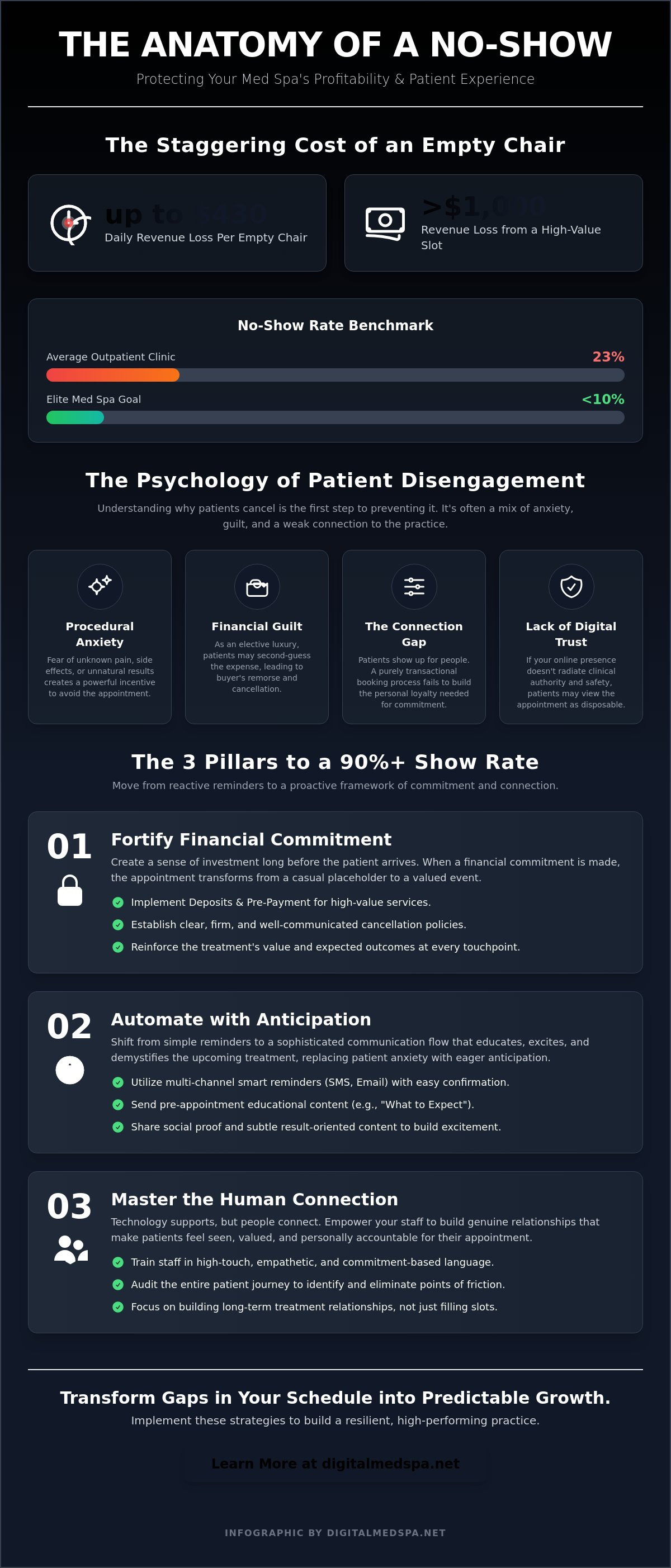
Did you know that every empty treatment chair represents a silent drain of up to $430 on your practice's daily revenue? While high-end aesthetics thrive on a sense of exclusivity, the reality of a 23% average no-show rate can quickly erode the clinical precision and luxury you've worked so hard to build. Implementing effective strategies to reduce patient no-shows is no longer just about operational efficiency; it's about protecting the bespoke experience your brand promises.
It's frustrating to see a prime injectable or laser slot go unused while your staff stands idle and your overhead remains fixed. You likely feel the tension between enforcing firm policies and maintaining a high-end guest experience. This guide will empower you to master the psychological and clinical frameworks needed to elevate your show-rate above 90% and secure your practice's profitability. We'll explore how to blend frictionless digital communication with a refined patient journey to ensure your schedule remains as luminous as your results.
Key Takeaways
Quantify the significant opportunity cost of vacant treatment slots and identify the psychological barriers, such as procedural anxiety, that lead to patient disengagement.
Master sophisticated strategies to reduce patient no-shows by integrating multi-channel automated reminders with refined financial commitment models.
Optimize your practice’s operational flow by auditing the patient journey for friction and training staff in high-touch, commitment-based communication.
Understand how a bespoke digital presence and clinical authority build the foundational trust required to maintain a predictable and profitable schedule.
Table of Contents
The True Cost of a Vacant Treatment Room in 2026
In the world of high-end aesthetics, a no-show is far more than an administrative oversight. It's a disruption of the clinical precision and luxury atmosphere you've meticulously curated. While general medical practices might calculate the cost of a missed visit at roughly $200, an aesthetic practice often faces far steeper consequences. When a patient ghosts a high-value injectable or laser resurfacing slot, the immediate loss often exceeds $1,000 in revenue, alongside the wasted preparation time of your most skilled clinicians. In a 2026 market defined by intense saturation, every vacant chair is a missed chance to deepen a patient relationship that your competitors are eager to claim.
The impact ripples through your clinic culture. Your staff's energy is a finite resource; it's built on a steady rhythm of care and transformation. When that rhythm is broken by a sudden gap, morale can falter. Underutilized clinicians lose their professional momentum, and the "rhythm of luxury" that defines a premium guest experience is replaced by a sense of idle frustration. Implementing effective strategies to reduce patient no-shows is essential to maintaining both your bottom line and the vibrant, high-performance energy of your team.
Beyond Direct Revenue: The Hidden Costs
Financial loss extends deep into your inventory management. Many advanced aesthetic treatments involve perishable clinical supplies or biologics that must be used within a specific window once prepared. A missed appointment isn't just lost time; it’s often literal product waste. Additionally, the cost of re-engaging a patient who has already disengaged is significantly higher than maintaining a consistent treatment plan. If your appointment scheduling software isn't optimized to catch these gaps early, you're effectively paying twice for the same lead.
Benchmarking Your Performance
What does success look like in 2026? While the average no-show rate for outpatient clinics often hovers around 23%, elite aesthetic practices should aim for a rate below 10%. It's helpful to segment these figures by treatment type. A consultation often carries a higher risk of a no-show than a prepaid series of bespoke facials. We define the Med Spa No-Show KPI as a primary measure of brand health, reflecting the level of trust and commitment your patients feel toward their aesthetic journey. Refining your strategies to reduce patient no-shows ensures that your schedule remains a predictable engine of growth rather than a source of financial anxiety.
The Psychology of the No-Show: Why Aesthetic Patients Disengage
The decision to book a bespoke aesthetic treatment is often made in a moment of inspiration. Yet, as the appointment nears, that initial excitement can evolve into hesitation. Unlike essential medical care, elective procedures reside in the delicate space between self-care and luxury, making them vulnerable to buyer’s remorse and financial guilt. When a patient begins to question the necessity of a luminous complexion or a more youthful profile, they are one step away from becoming a statistic. Understanding this emotional landscape is one of the most powerful strategies to reduce patient no-shows in a competitive market.
Clinical anxiety also plays a significant role in patient abandonment. Fear of the unknown, whether it’s the discomfort of a needle or the risk of an artificial result, can lead to last-minute avoidance. This hesitation is often exacerbated if a practice lacks visible digital authority. If your online presence doesn't radiate the same precision and safety as your clinical space, the patient may view the appointment as disposable. Cultivating this level of trust starts with a robust med spa SEO strategy that positions your practice as the premier expert in your region.
Building Anticipation Instead of Just Reminders
Traditional reminders often feel like administrative chores. To maintain commitment, you must reframe the visit as a transformation journey. Educational content sent via email or text can demystify the procedure, replacing fear with anticipation. Sharing social proof or subtle reminders of the results they can expect helps solidify their decision. In fact, research on no-show interventions suggests that behavioral engagement and reducing perceived barriers are more effective than simple alerts. By focusing on the "why" of the treatment, you keep the patient excited about their aesthetic goals.
The Connection Gap
Patients show up for people, not just for procedures. There is often a disconnect between the efficiency of a digital booking and the warm hospitality expected upon arrival. Bridging this gap requires personalization tactics that make the patient feel expected. Mentioning their specific skin concerns or previous treatment history in a pre-visit message creates a sense of accountability. When a patient feels like a partner in their aesthetic journey, they are far less likely to disengage; this personal touch is one of the most effective strategies to reduce patient no-shows. It transforms a clinical appointment into a valued relationship.
Three Strategic Pillars to Minimize Appointment Gaps
Eliminating gaps in your schedule requires more than just administrative diligence; it demands a framework that mirrors the sophistication of your clinical work. To protect your med spa's profitability, you must shift from simple "reminder management" to a holistic "relationship architecture." These three pillars represent the modern strategies to reduce patient no-shows by addressing the logistical and financial friction points that often lead to a vacant treatment room. By balancing clinical authority with the hospitality of a wellness retreat, you create an environment where patients feel both valued and accountable.
Automation with a Personal Touch
Generic "confirm your appointment" texts are increasingly ignored in a saturated digital landscape. In 2026, your messaging must reflect the same bespoke quality as your treatments. By utilizing multi-channel automation, including text, email, and voice, you create a steady, rhythmic connection with the patient. Integrating conversational AI is particularly effective, as 68% of appointment-related inquiries occur outside standard business hours. These tools provide 24/7 availability, allowing patients to reschedule with ease and preventing the silence that often precedes a no-show. The goal is to make the process feel like a guiding hand rather than a persistent alert.
Financial Commitment Models
Financial commitment is a hallmark of high-end service. Implementing non-refundable consultation fees or requiring deposits for high-value procedures shifts the patient's mindset from a casual inquiry to a professional engagement. It's essential to frame these deposits as "securing your exclusive time" rather than a punitive measure. This approach preserves the luxury experience while ensuring that your most valuable treatment slots, such as laser or injectables, are protected. Additionally, membership models provide a powerful incentive for recurring attendance, as the patient is already invested in their long-term aesthetic journey. These strategies to reduce patient no-shows ensure your practice remains a predictable engine of growth.
The final pillar is the "Luxury Standard" no-show policy. This framework should be transparent, prominently displayed, and consistently enforced. A well-defined policy is a sign of clinical authority; it acknowledges that your time and expertise are critical assets. While you must remain deeply personal and empathetic to unpredictable life events, maintaining clear boundaries ensures that your practice remains a place of rejuvenation and precision. When these pillars are integrated into your daily operations, you build a resilient schedule that supports both your team's morale and your practice's luminous reputation.
Implementing a High-Touch Attendance Framework
Moving from conceptual pillars to daily operations requires a meticulous audit of your patient journey. You must identify every friction point, from the initial digital inquiry to the moment a guest steps through your doors. Often, the most effective strategies to reduce patient no-shows begin with the language your front-desk team uses. Instead of asking if a patient "still wants" their slot, train your staff to use commitment-based phrasing. They should emphasize that a specific clinician and a private suite have been reserved exclusively for their bespoke treatment. This subtle shift reinforces the value of the appointment and the precision of the care provided.
Data analysis is your most reliable tool for identifying patterns before they become financial drains. By reviewing your schedule monthly, you can pinpoint "serial no-showers" and transition them to a pre-payment model. While you must remain deeply personal and empathetic, protecting your practice's time is a sign of clinical authority. A 24-hour "Final Call" for high-value procedures like full-face laser resurfacing or extensive injectables adds a layer of human touch that automated systems can't replicate. It reminds the patient that they aren't just a name on a list; they're an expected guest.
Predictive Analytics for 2026
Modern CRM data allows you to anticipate which patients are most likely to ghost based on past behavior or lead time. AI-driven scheduling optimizes treatment room efficacy by identifying high-risk slots for strategic intervention. Research indicates that practices utilizing conversational AI can reduce no-show rates by up to 30%. You can then adjust reminder frequencies based on individual behavior. A patient with a perfect attendance history might only need a single text, whereas a newer client might benefit from a more rhythmic sequence of educational touchpoints.
The Art of the 'Graceful' Policy
Communicating a no-show policy shouldn't feel like a cold ultimatum. When a patient misses their first visit, prioritize education over punishment. A gentle, automated "We Missed You" follow-up can encourage immediate rescheduling while reminding them of the policy's role in maintaining high-end service standards. Since 75% of patients report that easier online rescheduling would encourage them to attend, ensuring your digital interface is frictionless is critical. For practices looking to refine these delicate communication scripts, our business coaching and consulting services provide the framework to balance firm boundaries with high-end hospitality.
Beyond Reminders: How Digital Strategy Drives Patient Commitment
A patient’s commitment to their aesthetic journey begins long before they secure a slot on your calendar. In the 2026 landscape, a sophisticated med spa website design serves as more than a digital brochure; it acts as a silent contract of quality. When your interface radiates clinical precision and high-end hospitality, the patient subconsciously perceives your time as a premium asset. This psychological anchoring is one of the most subtle yet effective strategies to reduce patient no-shows. It transforms the appointment from a casual entry in a phone to a high-value reservation in a world-class clinical environment.
Reputation management also plays a critical role in validating the patient's decision. When a guest sees a consistent history of luminous results and glowing testimonials, the procedural anxiety that often leads to ghosting begins to evaporate. Similarly, social media management keeps your practice top-of-mind during the vulnerable window between booking and treatment. By showcasing the tranquility of your space and the science behind your results, you maintain the "transformation journey" narrative. This constant, gentle presence combats the financial guilt or buyer’s remorse that can occasionally settle in before an elective procedure.
SEO as a Trust Signal
Visibility breeds credibility in the eyes of the modern aesthetic patient. Dominating local search through med spa SEO does more than drive traffic; it establishes you as the definitive regional authority. Patients are far less likely to disregard an appointment with a practitioner they perceive as a leading expert. Additionally, a meticulously managed Google Business Profile provides frictionless directions and real-time updates, reducing the logistical stress that often triggers last-minute cancellations. High-authority content reinforces the "why" behind their treatment, bridging the gap between booking and arrival with expert education.
Partnering with a Specialized Marketing Agency
General retail marketing often fails to address the unique nuances of clinical commitment. It treats patients like impulsive shoppers rather than guests seeking a bespoke medical outcome. A specialized partner understands that strategies to reduce patient no-shows must be woven into the very fabric of your digital brand. At Digital Med Spa, we integrate advanced marketing technology with business coaching to identify and solve the operational gaps that drain your practice's revenue. Discover how our med spa marketing agency can optimize your practice growth and help you maintain a schedule as predictable and luminous as your clinical results.
Elevating Your Practice Toward a Luminous Future
Mastering the art of a consistent schedule requires a delicate balance between clinical rigor and the warmth of a luxury retreat. You've seen how identifying the psychological barriers to attendance and implementing high-touch frameworks can transform your daily operations. By moving beyond simple alerts and embracing a holistic relationship architecture, you ensure your practice remains a sanctuary of precision and predictable growth.
Implementing these sophisticated strategies to reduce patient no-shows is the final step in securing your med spa’s reputation. At Digital Med Spa, we serve as a national authority in aesthetic digital growth, combining high-performance website design with specialized business coaching. We empower you to reclaim your time and protect your profitability through science-backed marketing and operational excellence.
Schedule your bespoke consulting session with Digital Med Spa today to refine your patient journey. It's time to restore confidence in your schedule and ensure your practice continues to flourish with the elegance it deserves.
Frequently Asked Questions
What is the average patient no-show rate for medical spas?
The average no-show rate for outpatient clinics typically hovers between 15% and 30%. For specialized aesthetic practices focusing on dermatology or complex clinical procedures, these rates can occasionally reach the higher end of that spectrum. Maintaining a rate below 10% is considered the gold standard for elite med spas that prioritize a refined patient journey and professional commitment.
Is it legal to charge a no-show fee for aesthetic consultations?
It is generally legal to charge a no-show fee for elective aesthetic consultations, provided your policy is clearly communicated and displayed. As of early 2026, approximately 42% of medical practices utilize these fees to protect their time. You must stay informed about local regulations, such as pending legislation in New York that may require specific notice periods before a fee can be applied to a patient's account.
How many appointment reminders are too many for a luxury med spa?
A sequence of three touchpoints is generally considered the ideal cadence for a luxury environment. This typically includes a confirmation at the time of booking, a reminder 48 hours prior, and a final prompt 24 hours before the visit. Exceeding this rhythm can disrupt the sense of tranquility you've built, making your communication feel more like a persistent alert than a guiding hand in their aesthetic journey.
Can automated text messages really reduce no-shows better than phone calls?
Automated text messages often outperform traditional phone calls because they align with modern communication habits. Research indicates that conversational AI can reduce no-shows by up to 30% by providing 24/7 availability for rescheduling. Since 68% of patient inquiries occur outside of standard business hours, automation ensures your guests can manage their appointments at their own convenience without the friction of a live call.
How do I handle a long-term patient who suddenly starts missing appointments?
A personal outreach from a trusted clinician or manager is the most effective approach for long-term patients. A sudden change in behavior often signals a shift in their personal circumstances or a hidden barrier to care. By choosing empathy over immediate penalties, you preserve the relationship and can identify bespoke strategies to reduce patient no-shows that address their specific needs while reinforcing the value of their treatment plan.
Should I require a deposit for every single med spa treatment?
Requiring a deposit for high-value or long-duration slots is a prudent way to secure your practice's time. While you might waive deposits for brief follow-up visits to maintain a frictionless experience, treatments involving significant product costs or specialized equipment should always require a financial commitment. This practice frames the appointment as an exclusive reservation, ensuring that your most valuable clinical resources are utilized with precision and intentionality.
How can I use my website to reduce patient no-shows?
Your website can significantly lower no-show rates by offering a frictionless online rescheduling portal. Studies show that 75% of patients are more likely to attend if they can easily move an appointment digitally. By integrating your policy clearly on your site and providing educational content about procedural results, you build the trust and anticipation necessary to keep patients committed to their scheduled transformations.
What happens if a patient refuses to pay a no-show fee?
If a patient refuses to pay a missed appointment fee, prioritize a professional dialogue to understand their hesitation. While you cannot bill insurance carriers for services not rendered, you can choose to waive a first-time fee as a gesture of high-end hospitality. For repeat offenders, you may need to transition them to a pre-payment model or politely explain that future bespoke services cannot be reserved without a secured commitment.


Comments